
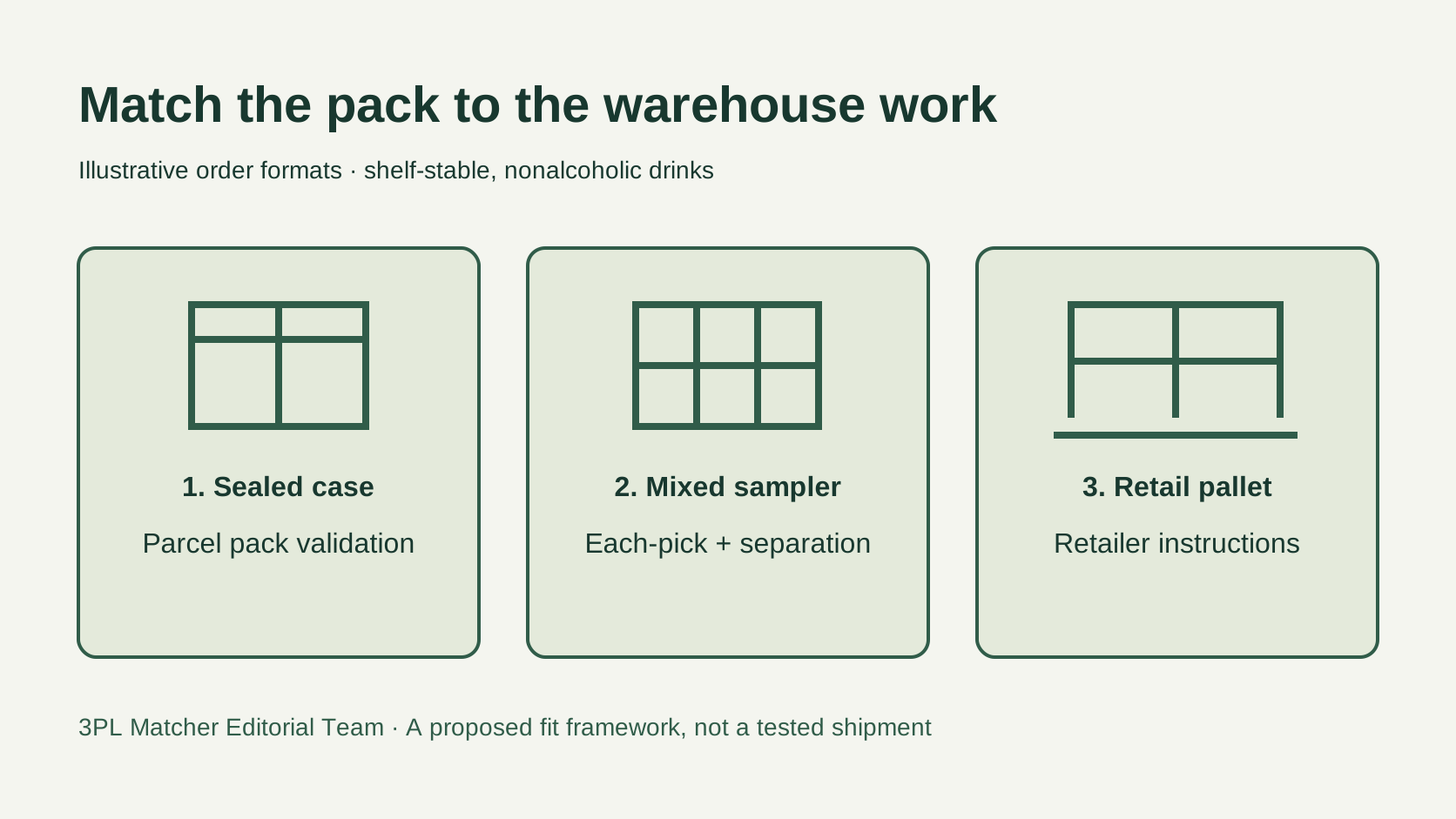
A beverage brand can have one product line and three very different fulfillment jobs. A customer buys a sealed case. Another builds a mixed flavor sampler. A retailer orders a pallet. A warehouse that handles one of those jobs neatly may need a different process for the other two.
The useful shortlist starts with those orders. “We handle beverages” is an opening statement; the pack and the route determine what you need to ask next.
This guide covers shelf-stable, nonalcoholic products. Refrigerated drinks, alcohol and products with special transport classifications require additional requirements that this exercise does not evaluate.
Describe what the warehouse will touch
For each selling format, send a candidate the product dimensions, container material, packed weight, manufacturer storage instructions, expected order mix and required shelf-life controls. Include the actual inner packaging. A photograph of a finished case does not show what happens when someone removes individual bottles to make a sampler.
The food-storage baseline is broader than keeping a building tidy. 21 CFR 117.93 addresses protection against contamination, allergen cross-contact and deterioration of the food and container in storage and transportation. Ask your food-safety owner to translate the applicable requirements and product specifications into the warehouse brief; do not assume one ambient-temperature label suits every beverage.
Use three sample orders to expose different work
We built a proposed fit matrix using three hypothetical formats. These are not shipments we tested, and no provider has passed this exercise.
| Sample order | Work the candidate must explain | Evidence to request |
|---|---|---|
| One sealed 12-can case to a household | Whether the supplied case is suitable for the proposed parcel journey | Approved pack specification, packed measurements and applicable validation record |
| Six glass bottles selected across flavors | Each-pick accuracy, bottle separation and assembly | Pack demonstration plan, component list, count checks and labor scope |
| Multiple sealed cases on a retailer pallet | Case quantities, pallet build and outbound instructions | Sample pallet plan and the actual retailer requirements used |
The three rows help you compare scope before comparing price. A case-shipping rate does not describe the labor of building a mixed sampler. A parcel packing process does not establish readiness for a retailer's receiving instructions.
Treat protection as part of the service specification
FedEx's liquid-shipping guidance discusses leak-resistant containment, absorbent protection and separation between containers. Use the relevant carrier guidance with your packaging specialist to develop the actual pack. Do not assume a successful warehouse demonstration proves resistance to the distribution journey.
Ask who provides dividers and other materials, who approves changes and how a damaged or leaking inbound case is isolated. Request a defined response when the approved packaging is unavailable. Otherwise a quote can appear complete while the most important protective work remains undecided.
Include measured packed dimensions and weight in the transportation quote. Label protection, parcel transportation and warehouse assembly separately so you can see which assumption changes the total.
Verify the product record survives each format
A mixed sampler can draw from several lots or date codes. Ask the candidate to explain what it records at receiving, picking and shipping and what can later be retrieved. The necessary detail depends on your product, customer requirements and applicable rules; this article does not prescribe a universal recordkeeping system.
For retail orders, establish any minimum remaining shelf life and other acceptance requirements from the customer's current instructions. Keep those requirements separate from your ordinary DTC release rules. If the warehouse cannot enforce them, record a gap rather than treating staff memory as a control.
Build a shortlist with gates, then preferences
Make the first gates product handling, approved pack execution and the required inventory records. Then compare costs, locations, reporting and support among candidates whose proposed service meets those needs. Mark unverified capabilities explicitly and require evidence before treating them as passed.
You may find a provider suited to sealed-case DTC orders but not mixed selections, or a retail operation that prices each-pick work differently. Those are useful distinctions. The best match is the one whose documented operating scope fits the orders you will actually send—not the longest list of industries on its website.
Related reading
Sources
- Food warehousing and distribution requirements — accessed 2026-10-03.
- FedEx packaging guidance for liquids — accessed 2026-10-03.