
Similar covers can hide different requirements
A fulfillment partner may be comfortable shipping books yet still need a precise explanation of your catalog. A hardback and paperback can share a title and similar artwork. An older edition may look close enough to a revision that a visual check alone is unconvincing.
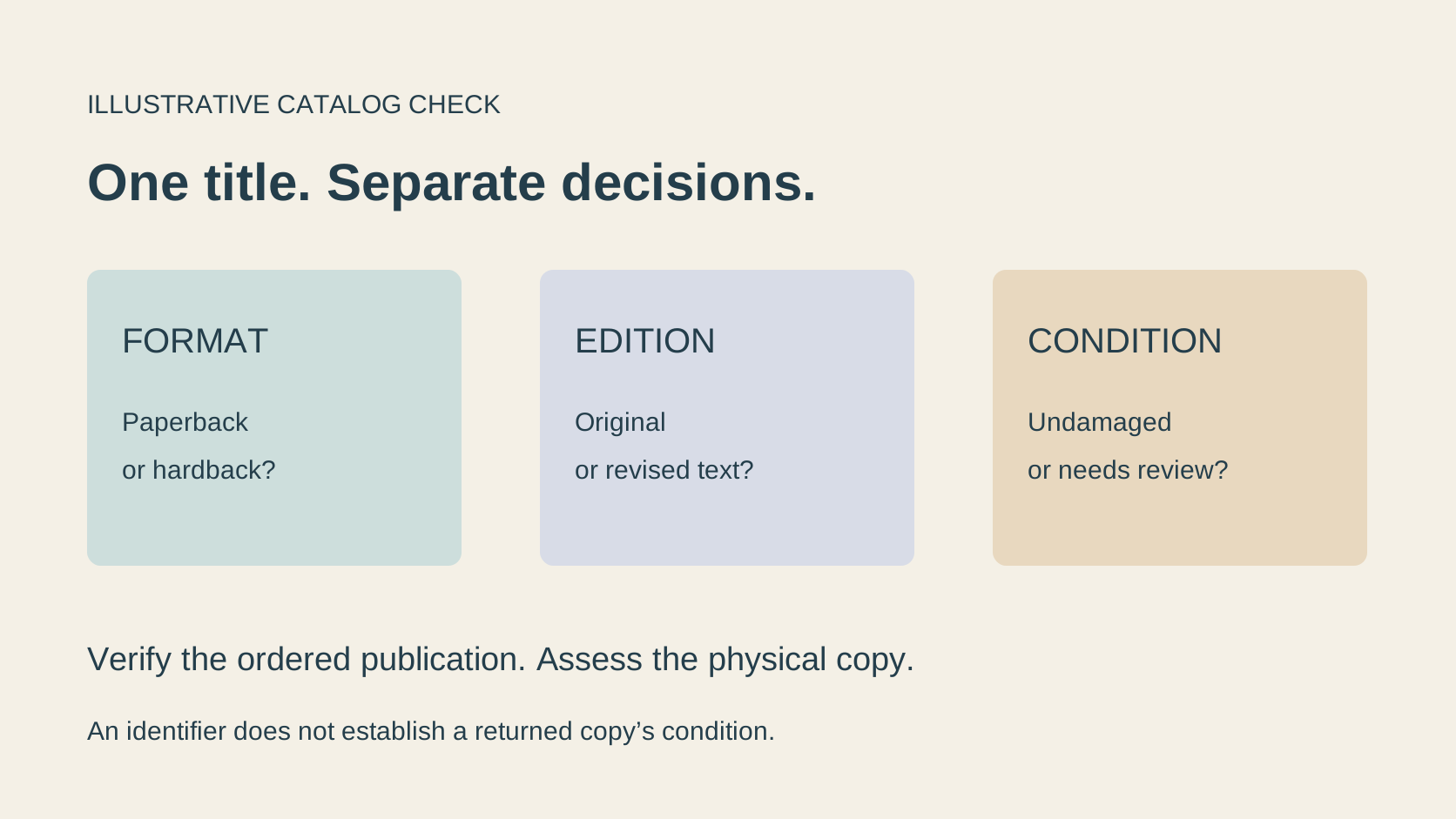
Start the provider brief with the distinctions that matter to the customer. Which formats exist? Are old and revised editions held at the same time? Can a returned copy be resold, and who decides its condition? These questions translate “book fulfillment” into work the warehouse can demonstrate.
Build a small catalog challenge
The International ISBN Agency specifies separate ISBNs for different formats, such as hardback and paperback, and for a substantially changed text. An unchanged reprint retains its ISBN when the publisher, text and binding remain the same. ISBN assignment guidance.
Using those distinctions, we constructed four acceptance cases. These are proposed exercises, not completed warehouse tests.
| Illustrative case | Risk to investigate | Evidence to request |
|---|---|---|
| Paperback ordered beside hardback stock | Correct title, wrong format | Item mapping and pick verification for each format |
| Hardback ordered beside paperback stock | Substitution based on appearance | A rule preventing an unauthorized format substitution |
| Revised edition ordered while older stock remains | Correct title, wrong text edition | Distinct item records and an exception for mismatched scans |
| Damaged copy returned with a valid identifier | Correct identity, unsuitable condition | Separate condition decision and disposition record |
The fourth case is deliberately different. An identifier can tell the system which publication the copy belongs to; it cannot establish that the physical copy is undamaged. Treat identity and condition as separate decisions in the returns process.
Ask for the exception, not just the successful scan
Have a candidate explain what happens when an unexpected edition arrives in a carton. Does receiving stop, place the units on hold or create a new record? Who can approve the mapping? A fast scan is useful only if the wrong item produces a controlled exception.
If you sell signed copies or other special stock, describe those attributes explicitly in your item requirements. Do not assume a publication identifier establishes a signature or a copy's condition. Ask the publisher or appropriate ISBN agency about identifier assignment rather than creating new numbers for a warehouse convenience.
Match the workflow to your business
A direct-to-consumer publisher may prioritize single-copy presentation and damage handling. A business serving retailers may also need case quantities and customer-specific packing instructions. Supply both order types when both matter; a single paperback sample does not establish the entire fit.
Choose the next evaluation step based on the candidate's gaps. Request a controlled demonstration using your representative variants and written expected results. Record what was shown and what remains untested. A provider that can explain the differences between editions, formats and returned condition is easier to assess than one relying on a general claim of publishing-industry experience.
Related reading
Sources
- https://www.isbn-international.org/node/88 — accessed 2026-10-16