
Your product is a compact electronic device. It fits neatly in a small carton, so a standard ecommerce warehouse seems like an obvious match. Then the first customer wants to return a used unit, and the original outbound process no longer answers every question.
For lithium-battery products, the return path belongs in the selection brief from the beginning. A provider may be suitable for one condition, packaging configuration or destination without covering another.
Describe the product before asking for coverage
Provide the battery chemistry and rating, whether batteries are installed or packed separately, product documentation, intended destinations and expected return conditions. Have the responsible specialist confirm the classification and required evidence. A generic electronics label is not enough to establish an approved shipping process.
PHMSA identifies lithium batteries as regulated hazardous material and points shippers to the applicable transportation requirements. Its guidance also distinguishes the heightened risks of damaged, defective or recalled batteries. PHMSA lithium-battery guidance
That is a reason to ask precise scope questions, not to assume every battery-powered product requires an identical service or that a broad certification claim covers your exact flow.
Build a three-flow shortlist
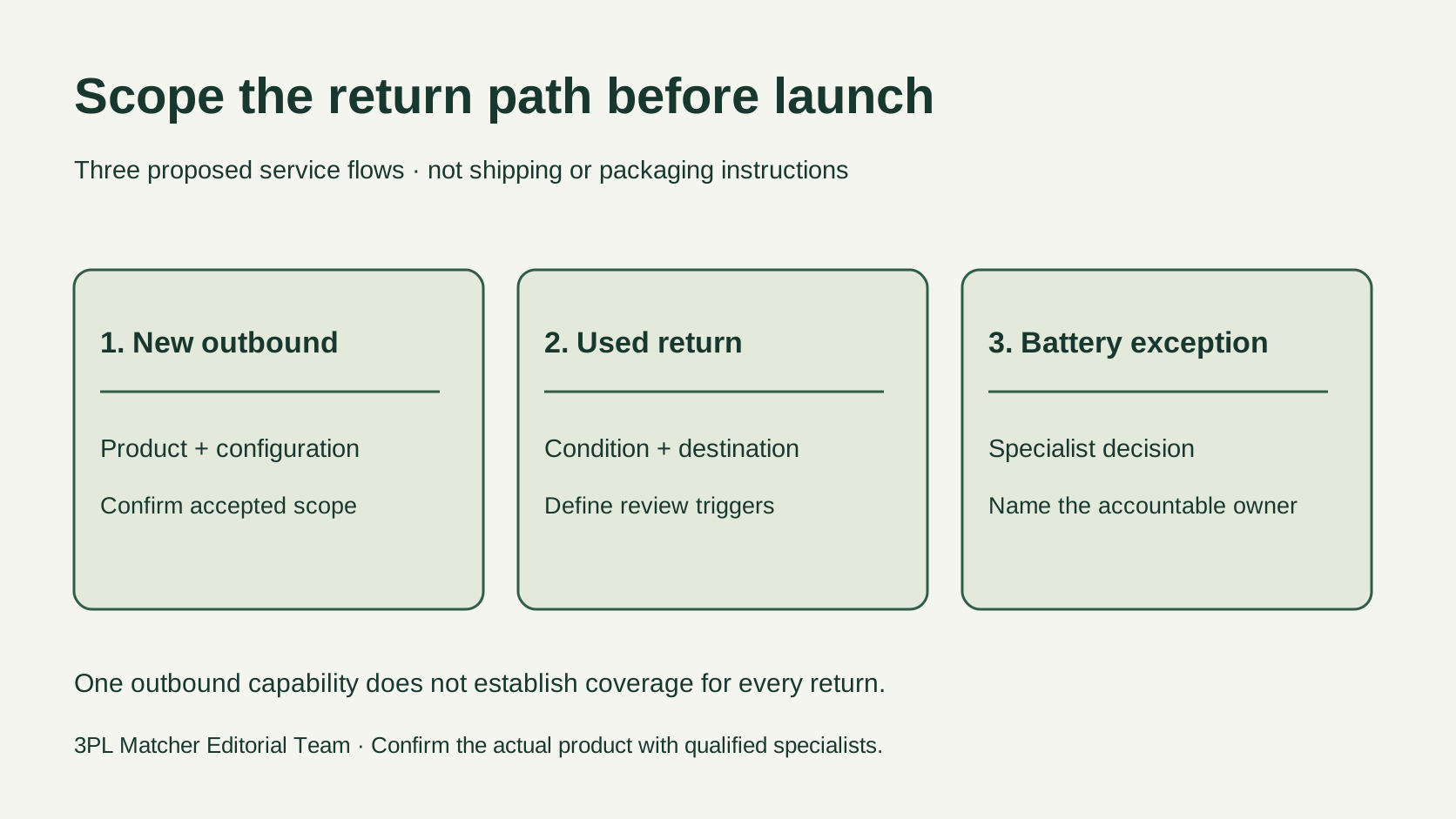
We developed a requirements matrix for three hypothetical flows. It is a buyer's scoping tool, not a packaging instruction, a regulatory approval or evidence that a named 3PL accepts any of these items.
| Flow | What to establish before launch | Evidence to request |
|---|---|---|
| New device outbound | Exact product, configuration, destination and accepted service | Written scope and qualified review of the product documents |
| Used device returned for inspection | Intake questions, permitted route and receiving location | A return procedure that accounts for used condition |
| Suspected battery damage or recall | Who stops the ordinary label flow and makes the next decision | Named specialist escalation and an approved handling/disposition arrangement |
A reassuring answer for the first row cannot fill the other two. If a provider uses a specialist partner for exceptions, ask where the handoff occurs, who remains accountable and which costs are excluded from the ordinary return fee.
Do not assume the outbound label works in reverse
USPS's current Publication 52 distinguishes used, damaged or defective electronic devices from new or manufacturer-certified units. Its domestic rules require specified markings for those devices, including a surface-transportation restriction. Separately, damaged, defective or recalled batteries are generally prohibited in USPS mail unless the stated approval applies. These are distinct rules; a used device is not automatically a damaged battery. USPS Publication 52, section 349
The practical selection question is whether the return process identifies the relevant condition before automatically issuing a label. Do not ask customers to guess a transport classification. Have the responsible qualified team define the questions, review triggers and instructions. Requirements differ by carrier, configuration and destination.
Price the exception path while you still have choices
Ask for ordinary inspection and storage charges, but also identify any specialist transfer, extended hold or disposal costs. Leave unquoted items as unknown; do not assume they are included because outbound fulfillment is inexpensive.
Make the service boundary visible in your internal customer-support guidance. If the 3PL cannot receive a particular exception, the brand needs a documented alternative before promising a routine return. A specialist arrangement can be workable, provided ownership and eligibility are clear.
Use the three rows as separate acceptance gates when comparing candidates. This small desk exercise cannot certify compliance or provider competence. It can prevent a common scope mistake: choosing a partner around the easiest outbound parcel while leaving the hardest return without an owner.
Related reading
Sources
- Lithium battery transport scope and risk distinctions — accessed 2026-10-04.
- USPS domestic lithium battery and device provisions — accessed 2026-10-04.